
East Idaho winter roads can leave a pale film on paint, wheels, rocker panels, and the underside of a vehicle. That film is not always ordinary dirt. The Idaho Transportation Department uses salt, salt brine, and other deicers as part of winter road maintenance, so drivers should plan for regular cleaning instead of waiting until spring.
The short answer
Wash road salt and brine off when conditions allow the vehicle to dry safely—especially after a storm cycle ends and the roads have dried. If the vehicle is being exposed again every day, you do not need to chase a perfectly clean finish after every drive. The practical goal is to prevent repeated layers of residue from sitting on the paint, wheels, wheel wells, seams, and underbody for long periods.
There is no single schedule that fits every driver. A vehicle that travels treated highways every day will need attention sooner than one that stays parked or only travels dry local streets.
Why winter road residue matters
ITD says its winter toolbox includes liquid salt brine and magnesium chloride before storms, along with solid salt during storms. Those treatments help keep roads safer, but they can be carried onto your vehicle as wet spray and slush. Read ITD’s winter-road guidance.
Vehicle manufacturers also warn owners not to ignore salt. Ford’s vehicle-care guidance says to remove road salt from paint and wash the underbody frequently when salt is used on roads. It also recommends keeping body and door drain holes free of packed dirt. See Ford’s exterior-cleaning guidance.
That does not mean a salty vehicle will rust overnight. Corrosion develops over time and depends on the vehicle, existing damage, moisture, exposure, and maintenance. Regular cleaning is a preventive habit, not a guarantee against rust.
A practical winter washing schedule
Use the vehicle’s actual exposure—not just the calendar—to decide when to wash.
Wash sooner when:
- You have driven through wet, treated slush.
- White or gray residue is building up on lower doors, rocker panels, wheels, or the rear of the vehicle.
- Mud and deicer are packed into wheel wells.
- You regularly drive highways or follow traffic that throws road spray.
- The vehicle already has paint chips, exposed metal, or visible underbody corrosion.
It can wait briefly when:
- Roads are dry and the vehicle has only a light dusting of residue.
- Another storm is arriving immediately and safe drying conditions are unavailable.
- Temperatures are so low that water may freeze around doors, locks, handles, or your washing area.
A useful habit is to clean after a run of storms once roads are mostly dry, then check the vehicle again after the next wet road treatment. At the end of winter, give the lower body, wheel wells, and underside a more thorough rinse to remove remaining buildup.
Do not clean only the shiny panels
The most visible paint is only part of the job. Winter spray collects low on the vehicle and in areas that are easy to overlook:
- Wheels and around the lug area
- Wheel wells and splash guards
- Rocker panels and lower door edges
- Behind trim and mud flaps
- The underside, including exposed suspension and chassis areas
- Body and door drain openings
Use care around brakes, electrical components, sensors, damaged coatings, and delicate trim. Follow the pressure, distance, temperature, and cleaning-product limits in your owner’s manual. Requirements vary by vehicle, and more pressure is not automatically better.
How to wash safely in freezing weather
Choose a time when the vehicle can drain and dry before it sits through a deep freeze. After washing, remove standing water around door jambs, handles, fuel doors, mirrors, and weather seals. Make sure doors and hatches open normally before leaving the vehicle outside.
If washing at home would create an icy driveway or frozen runoff, wait for a safer window or use a facility designed to manage winter wash water. Never crawl under an unsupported vehicle to rinse it.
Is paint protection the same as cleaning?
No. Wax, spray sealant, and other protective products can make routine cleaning easier and provide a sacrificial layer on the finish, but they do not make a vehicle maintenance-free. Road film still needs to be removed.
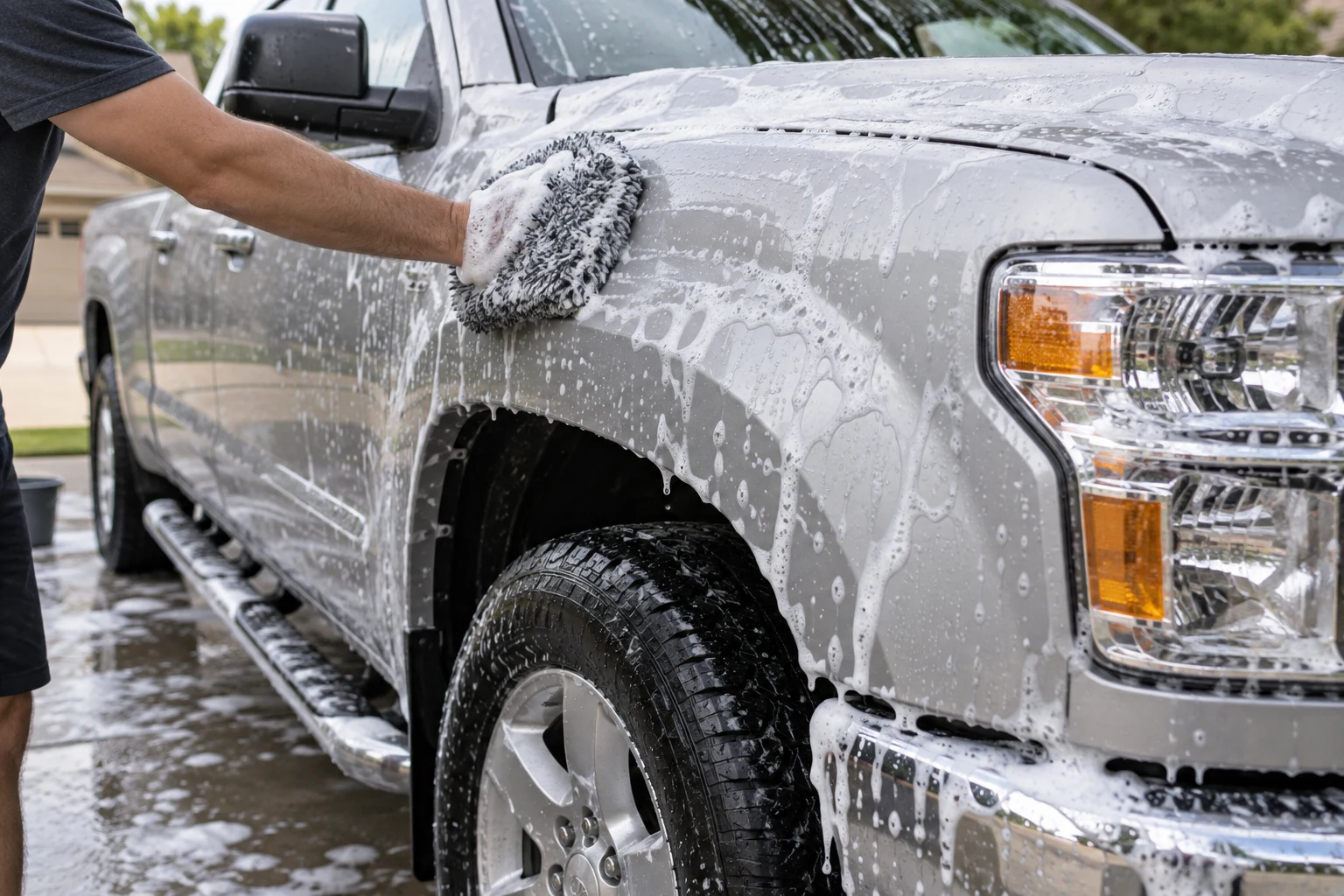
Our exterior detailing options include a foam pre-soak, safe hand wash, wheel and tire cleaning, and protection matched to the selected package. Higher levels add decontamination and upgraded protection. An underbody flush is not listed as a standard inclusion, so ask what is appropriate and available for your vehicle before booking.
When a professional exterior detail makes sense
A routine rinse may be enough for fresh residue. A detail becomes more useful when road film has built up, the finish feels rough, protection has weakened, or you want the paint thoroughly cleaned and protected before the harshest part of winter.
East Idaho Auto Detailing serves Rexburg, Idaho Falls, Shelley, Blackfoot, St. Anthony, Pocatello, and surrounding areas when travel can be arranged. Availability depends on your location, weather, and the work your vehicle needs.
Start your quote and tell us where you drive, what buildup you are seeing, and which areas concern you most. We will help you choose an appropriate level of exterior care without promising services your vehicle may not need.
Originally published by East Idaho Auto Detailing.